
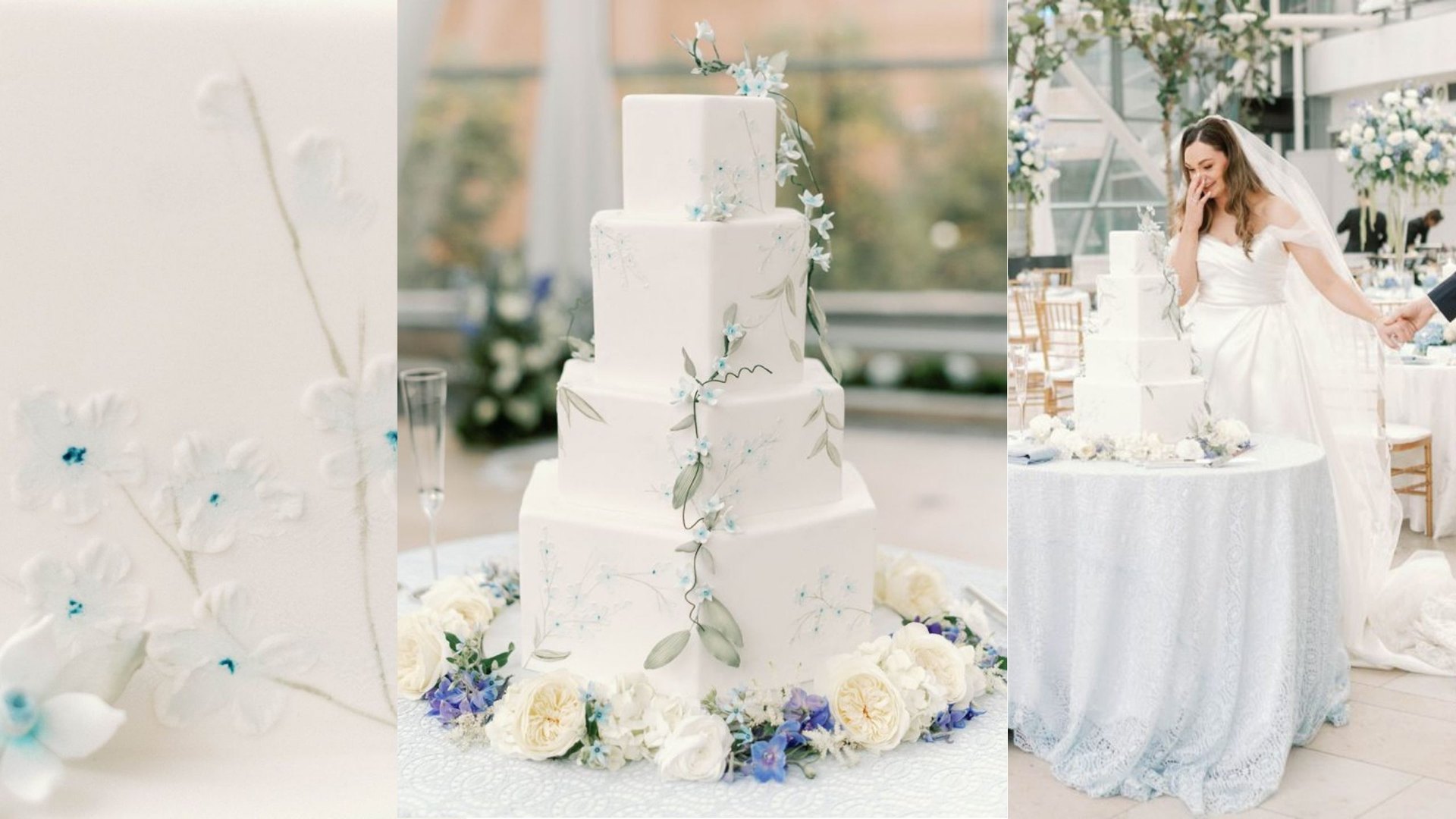
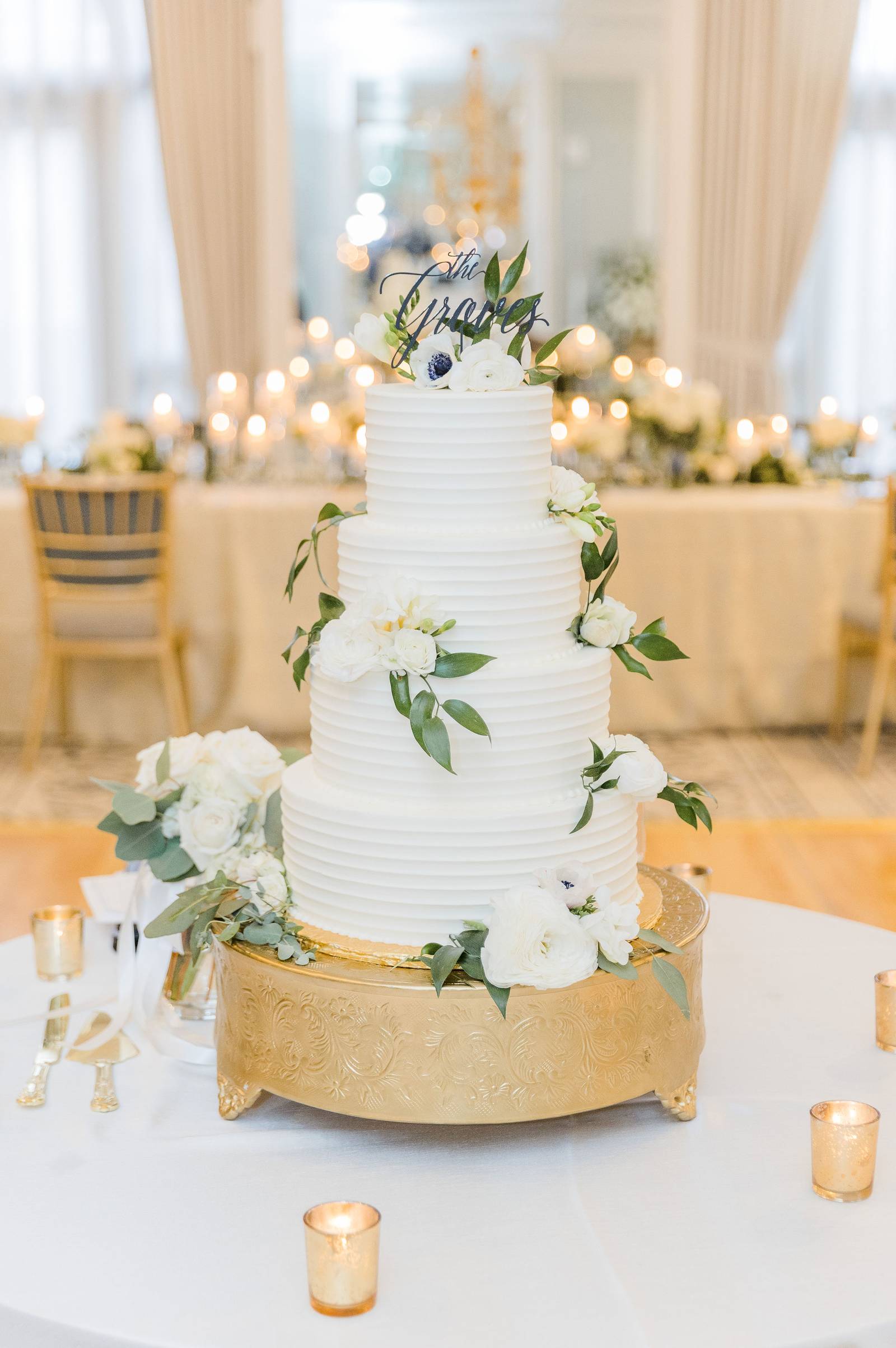
Photo: Sweet Escape Cake Company
Wedding Cakes
Fondant vs. Buttercream: Which Is Right for Your Cake?
Fondant vs buttercream comes down to a simple trade-off: buttercream wins on taste and price, while fondant wins on a flawless, sharp finish and standing up to heat. Most Indianapolis couples choose a buttercream cake, often with a few fondant accents. Here is how the two compare, and how to pick the right one for your cake.
At Sweet Escape Cake Company in Indianapolis, we have iced thousands of cakes both ways, and we will be honest with you about where each one shines. If you are still mapping out the whole cake, start with our complete guide to wedding cakes in Indianapolis. If you already know you want to talk flavors, jump to our best wedding cake flavors guide. This page is about the icing on the outside.
What is the difference between fondant and buttercream?
Buttercream is a whipped frosting of butter and powdered sugar that stays soft and tastes rich. Fondant is a rollable sugar paste that drapes over the cake in a thin, firm shell for a smooth, flawless look. Buttercream is about flavor and a softer style; fondant is about a perfectly even, sculpted finish. Here is the full side-by-side.
| Factor | Buttercream | Fondant |
|---|---|---|
| What it is | Whipped butter and powdered sugar, soft and spreadable | A rollable sugar paste, draped over the cake as a thin shell |
| Taste | Rich and creamy, carries any flavor, the crowd favorite | Very sweet with a chewy, modeling-clay texture, often peeled off |
| Texture | Soft and light, melts into the cake | Firm and smooth, a thin layer over the surface |
| Look | Soft and natural: swirls, ruffles, combed texture, semi-naked | Flawless and sharp: porcelain-smooth panels and crisp edges |
| Cost | The standard finish and the lower of the two | About 7% more per serving here, a narrower gap than most expect |
| Heat and humidity | Can soften or sweat above the mid-80s | Holds its shape in heat, better for outdoor summer events |
| Decoration | Piped flowers, borders, textured and painterly finishes | 3D sculpting, sharp geometric edges, fine detail, bold or metallic color |
| Cutting and serving | Slices cleanly and easily | The shell can be tougher to cut, and many guests set it aside |
| Best for | Flavor-first weddings, rustic and modern designs, indoor venues | Sculpted or ultra-smooth showpieces, hot or outdoor weddings |
Which is better, fondant or buttercream?
Neither is better for everyone. Buttercream is better for taste, price, and a soft or textured look, and it is the choice most couples make. Fondant is better for a porcelain-smooth finish, sharp edges, sculpted shapes, and surviving heat. The right answer depends on your design, your venue, and your guest list, not on which one a baker prefers to work with.
Here is the short version we give couples at the tasting table: if you care most about how the cake tastes, go buttercream. If you care most about a flawless, gravity-defying, sculpted look, go fondant. If you want both, you can have both, and we will cover that below.
What is buttercream best for?
Buttercream is best for couples who want the cake to taste as good as it looks. It is the flavor-first pick: rich, creamy, and able to carry any of our flavors, from Butter Pecan to lemon-raspberry. It also nails the soft, modern, and rustic styles that are everywhere right now, including combed texture, ruffles, stucco finishes, and the semi-naked look.
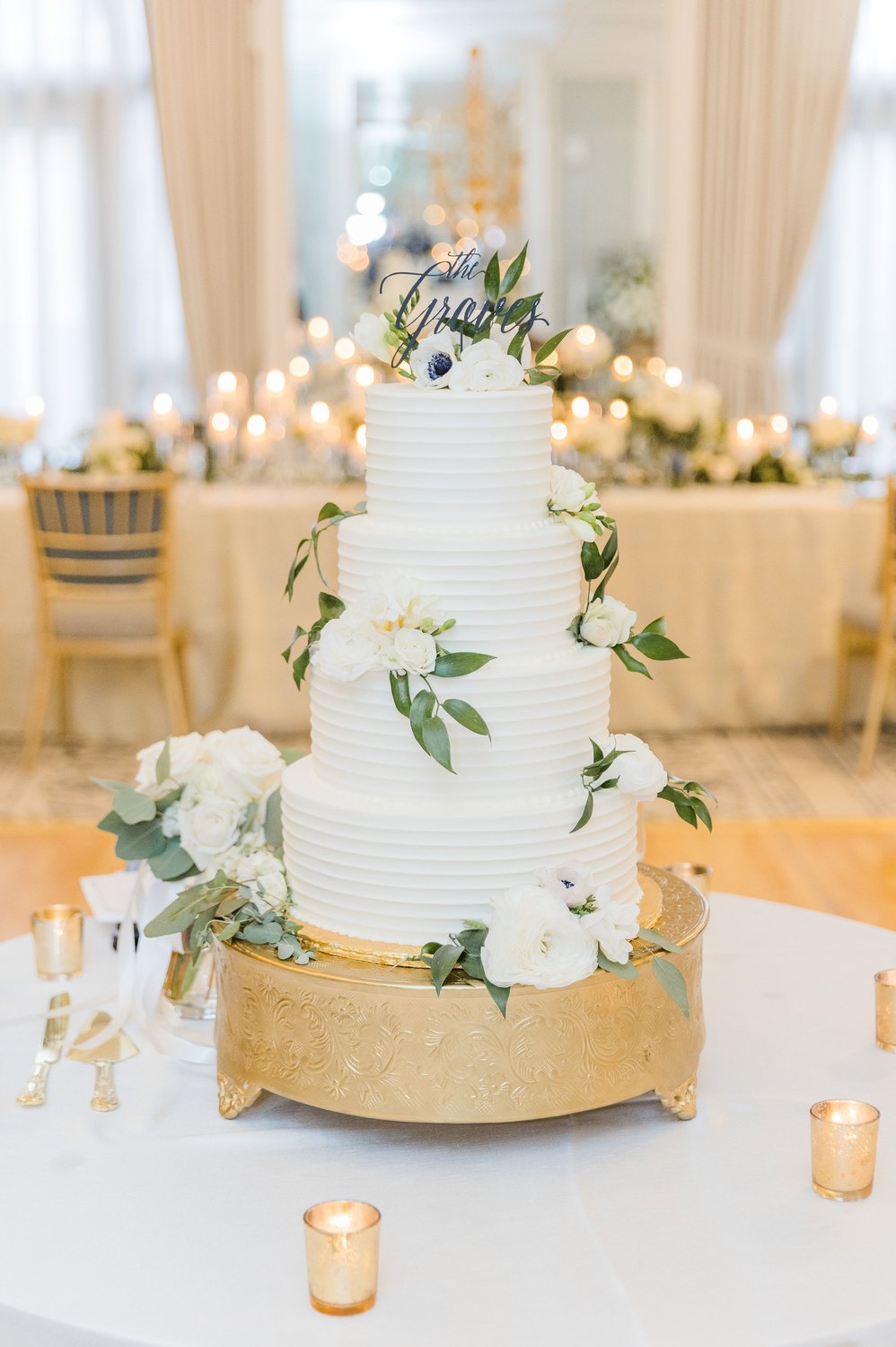
We use house-made buttercream on our cakes, and that choice is on purpose. The 2026 wedding cake trends lean into textured and Swiss buttercream finishes, fabric-inspired pleats, and a clear move toward less-sweet frosting (The Knot, 2026). That is buttercream’s home turf. According to Amy McCorkle, owner of Sweet Escape Cake Company, “nine out of ten couples who come in worried about how a cake will taste leave with a buttercream cake. We make our buttercream in house, so the outside tastes as good as the inside, and that is the whole point of a cake.” For the looks that buttercream does best, browse our 2026 wedding cake trends guide.
What is fondant best for?
Fondant is best for a flawless, smooth finish and designs buttercream cannot hold. It gives you porcelain-even panels, crisp sharp edges, bold or metallic color, and the ability to sculpt 3D shapes and fine detail. If you want a cake that looks like it was carved from marble, or a themed groom’s cake shaped like an object, fondant is the material that gets you there.
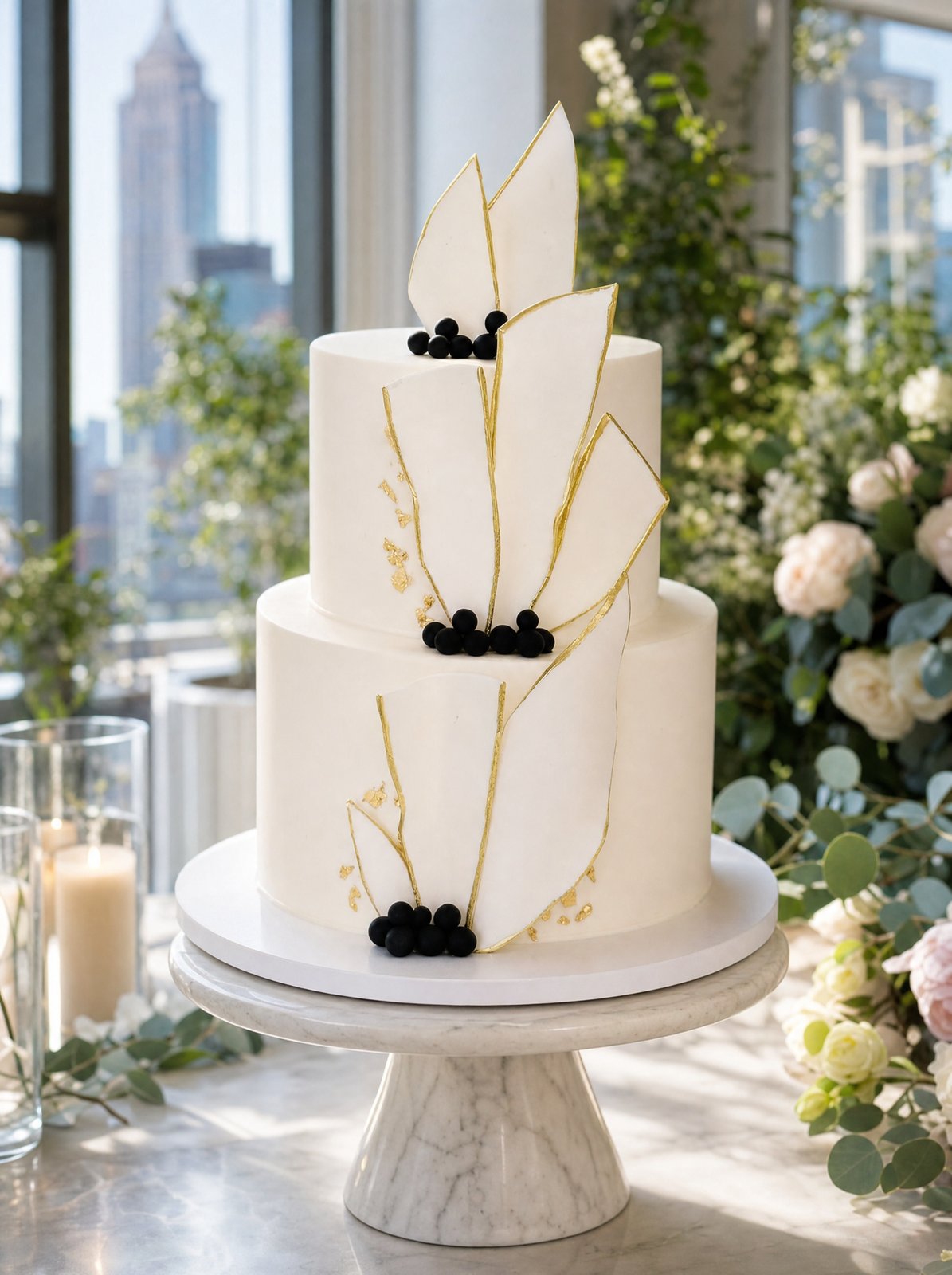
Fondant is also where exact color matching gets easiest. One of our couples, Lauren N., wrote on The Knot that “I was very particular about the colors and wanted it to match our invitation suite, and they did an insane color match.” Another, Megan S., wrote that “I had a lot of people ask if it was fake because it was so pretty.” That fake-perfect, can-I-touch-it smoothness is the thing fondant does and buttercream cannot quite match. The same is true for sculpted custom birthday and occasion cakes, where a fondant shell holds a shape that buttercream would lose.
Is buttercream cheaper than fondant?
Yes, buttercream is cheaper than fondant. Fondant costs more because it adds material cost plus the extra skilled time to roll, drape, and smooth it by hand. Priced by the serving, buttercream cakes nationally run about $4 to $6 and fondant about $6 to $10 (BakeProfit, 2026), and the average wedding cake lands near $540 (The Knot, 2025). In central Indiana, per-serving pricing sits around $5 to $7 (CALJAVA, 2024). For scale, wedding cakes can run $700 to $1,100 nationally (Zola, 2025), and design detail is most of what separates the low end from the high end.
At Sweet Escape, the gap between the two finishes is much narrower than those national ranges suggest. Fondant runs about 7% more per serving than buttercream, and that holds at every size and tier count. On a real cake that difference is small enough that it almost never decides the question by itself, which is the genuinely useful thing to know here: pick your finish on look, texture, and how much heat the day will throw at it, and treat the cost difference as a footnote rather than the deciding factor.
Where cost does move meaningfully is design detail, not the icing. Hand-piped sugar flowers, sculpted shapes, hand painting, and metallic work add skilled labor whichever finish you choose, and labor is most of what you are paying for. The biggest lever is guest count: moving most of your room onto matching kitchen cakes runs about half the per-serving price of a decorated tier, so you keep the display cake and cut the dessert line close to half. Every cake is quoted individually by size and design, with all 19 flavors and 9 fillings included at the base price. See our wedding pricing guide for current pricing examples, and our wedding cake cost guide for the full breakdown of what drives a cake’s price.
Does fondant taste good?
Honestly, traditional fondant has a taste problem, and we are not going to pretend otherwise. Store-bought rolled fondant is mostly sugar, so it reads as very sweet with a chewy, modeling-clay texture, which is exactly why so many guests peel it off and leave it on the plate. That reputation is earned, and it is the number one reason couples ask us about buttercream.
The fuller story: modern and homemade fondants, including marshmallow fondant, taste noticeably better than the old blocks, and a skilled baker rolls it thin so it is easy to eat. Even so, buttercream still wins on flavor for most people, and a cake is something you actually want to eat. That is why our default is buttercream, with fondant brought in only where a design truly needs it. For the flavors and fillings that make the inside worth eating, see our flavors and fillings menu.
Which holds up better in summer heat?
Fondant holds up better in heat and humidity, which matters a lot for an Indiana summer. Buttercream is butter, so it can soften, sweat, and lose crisp detail once the temperature climbs into the mid-80s, especially at an outdoor or non-air-conditioned venue. Fondant forms a shell that seals in moisture and keeps its shape far longer in the same conditions.
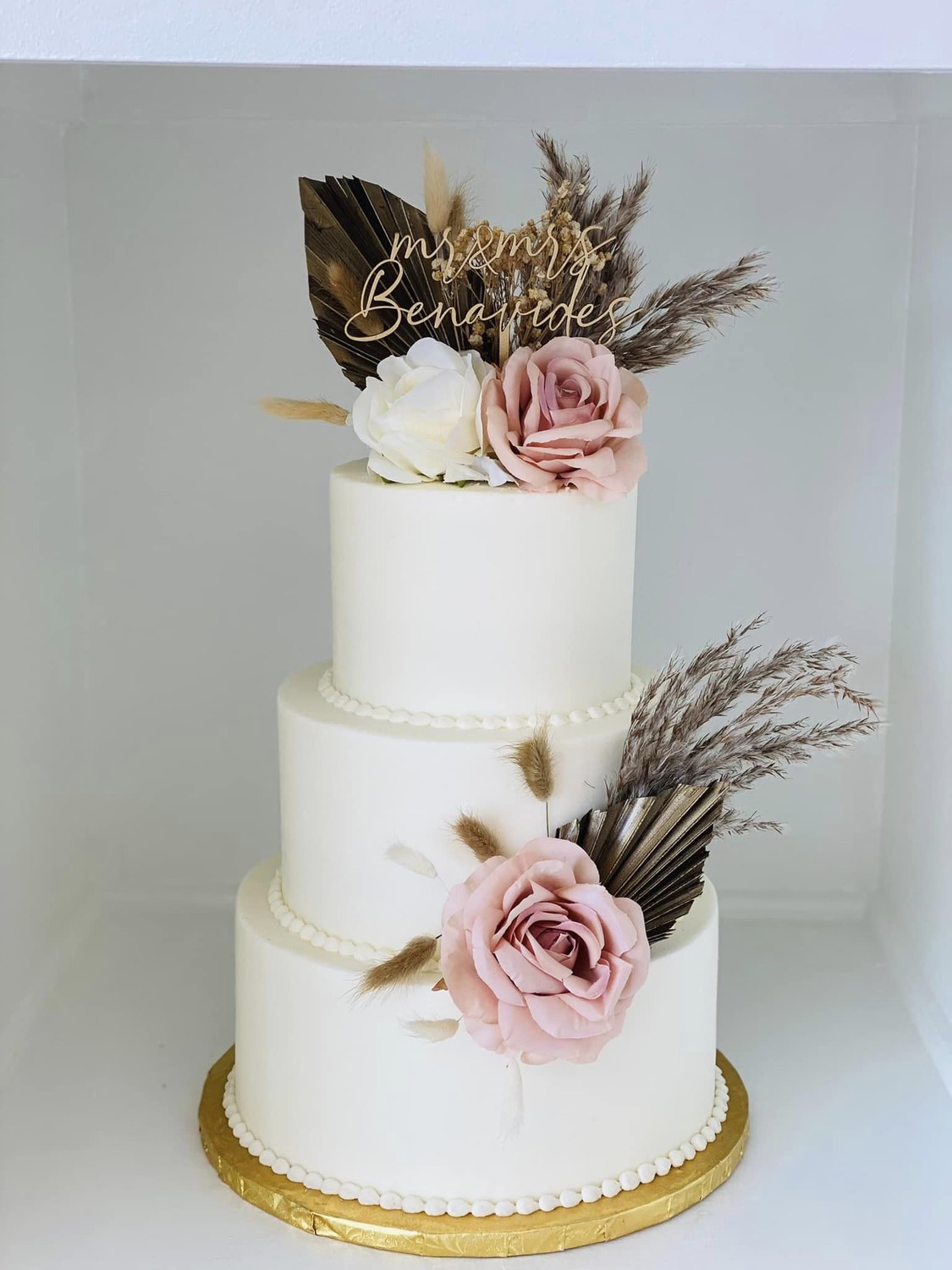
This is the one place where fondant clearly earns its keep for our couples. June through September weddings in barns, tents, and gardens around central Indiana put real stress on a cake. According to Amy McCorkle, owner of Sweet Escape Cake Company, “for a July wedding in a barn with no air conditioning, we will steer you toward a sturdy buttercream cake with fondant only where the design needs it, or a fondant finish if the look calls for it. We would rather plan for the heat than fix a cake at the venue.” If your reception is outdoors in peak season, tell us early so we can build for it.
What are the disadvantages of fondant?
The main disadvantages of fondant are taste, cost, and the way it cuts. It is sweeter and chewier than most people enjoy, so guests often peel it off. It costs more in both materials and labor. It can crack, tear, or develop an “elephant skin” if handled wrong, and a refrigerated fondant cake can sweat and turn sticky.
Fondant is also harder to slice cleanly, and the firm shell is part of why some guests set it aside. None of this makes fondant a bad choice. It just means fondant should be used for what it is genuinely best at, a flawless or sculpted look, rather than as a default for every cake.
Are most wedding cakes fondant or buttercream?
Most modern wedding cakes are buttercream. Fondant had its moment when ultra-smooth, perfectly sharp cakes were the goal, but taste and the rise of textured design have pushed buttercream back to the front. Today fondant is used mainly for sculpted shapes, super-smooth panels, and heat-proof cakes, while buttercream covers the rest.
The trend data backs this up. The 2026 wedding cake direction is textured and Swiss buttercream, pleated and fabric-inspired finishes, and less-sweet frosting, with smooth fondant nowhere near the headline looks (The Knot, 2026). Couples want a cake that photographs beautifully and tastes like a year of planning deserves, and buttercream now does both.
How long does fondant last?
A fondant-covered cake holds at room temperature for about three to four days, and leftover rolled fondant keeps for a couple of weeks in an airtight container (Wilton). The one rule that trips people up: do not refrigerate a fondant cake, because the cold causes condensation that makes the surface sticky and dull. A buttercream cake is best enjoyed within a few days and kept somewhere cool and out of direct sun.
Can you have the best of both?
Yes, and it is what we recommend most often. The most popular approach is a buttercream cake with fondant accents: buttercream for the body, the flavor, and the soft finish, and fondant only for the sharp details, sculpted toppers, or smooth panels that buttercream cannot hold. You taste buttercream on almost every bite and still get the precise touches fondant is best at.
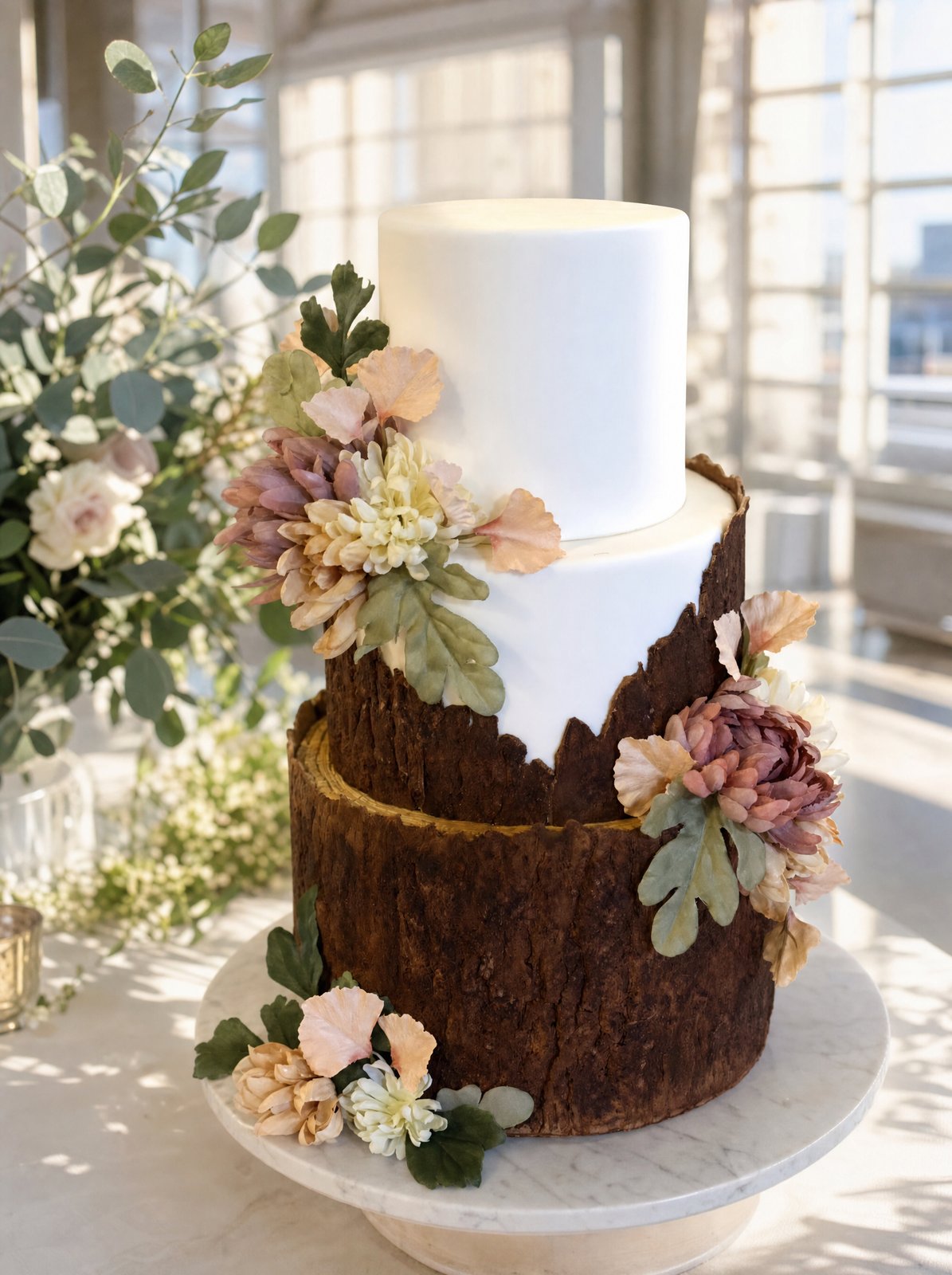
This hybrid is also how a fondant finish gets applied at all, since fondant is rolled over a thin layer of buttercream that smooths the cake and helps it stick. The takeaway is that this is not really an either-or for most couples. It is a conversation about which parts of your design want flavor and which parts want a flawless edge, and that is exactly what we work out together at your tasting.
The best way to settle the fondant vs buttercream question is to taste both and see your design in person. Book a tasting or request a quote, and our cake artists will help you choose the finish that fits your flavor, your venue, and your budget. Every special occasion deserves a Sweet Escape.
Frequently Asked Questions
Which is better, fondant or buttercream?
Neither is better for everyone. Buttercream is the better choice for taste, price, and a soft or textured look, and it is what most couples pick. Fondant is the better choice for a porcelain-smooth finish, sharp edges, sculpted shapes, or a hot, humid, outdoor wedding. Many couples land on a buttercream cake with a few fondant details.
Is buttercream cheaper than fondant?
Yes. Buttercream costs less because fondant adds material cost plus the extra skilled time it takes to roll and drape it. Priced by the serving, buttercream nationally runs about $4 to $6 and fondant about $6 to $10 (BakeProfit, 2026). At Sweet Escape the gap is much narrower than that, about 7% more for fondant, which is rarely enough to decide the question on its own. Every cake is quoted individually by size and design.
How long does fondant last?
A fondant-covered cake holds at room temperature for about three to four days, and unused rolled fondant keeps for a couple of weeks in an airtight container (Wilton). Fondant should not be refrigerated, since the cold causes condensation that makes the surface sticky and dull. Buttercream cakes are best eaten within a few days and kept cool.
Can you put fondant over buttercream?
Yes, and that is almost always how it is done. A thin layer of buttercream (or ganache) goes on first as the smoothing base and the glue that helps the fondant stick. For a hot-weather cake we often use a firmer base under the fondant so nothing slips. This is also how we add fondant accents to a buttercream cake.
Are most wedding cakes fondant or buttercream?
Buttercream is the more common and more on-trend choice for modern weddings. Fondant has moved to a niche role, used mainly for sculpted shapes, ultra-smooth panels, or cakes that have to survive heat. The 2026 design trends lean hard into textured and Swiss buttercream finishes rather than smooth fondant (The Knot, 2026).
Do you eat the fondant on a cake?
Fondant is edible, but plenty of guests peel it off because of the sweet, chewy texture. Good bakers roll it thin so it is easy to eat or set aside, and the cake and filling underneath are the real flavor. If you want every bite to taste great, buttercream is the safer call, since people happily eat it.
More from the blog
Wedding Cakes
Wedding Cake Delivery in Indianapolis: How It Works
How wedding cake delivery works in Indianapolis: real delivery fees, when the cake arrives, what setup includes, and when DIY pickup is safe.
Wedding Cakes
Wedding Cake Size Chart: How Much Cake Do You Need?
A wedding cake size chart with real numbers: servings for every tier size and combination, what feeds 100 guests, the 80% rule, and kitchen cake math.
Wedding Cakes
Kitchen Cakes: The Sheet Cake Wedding Budget Trick That Works
Kitchen cakes are plain sheet cakes that feed wedding guests for exactly half the per-serving price of decorated tiers. See how the math works at every guest count.