
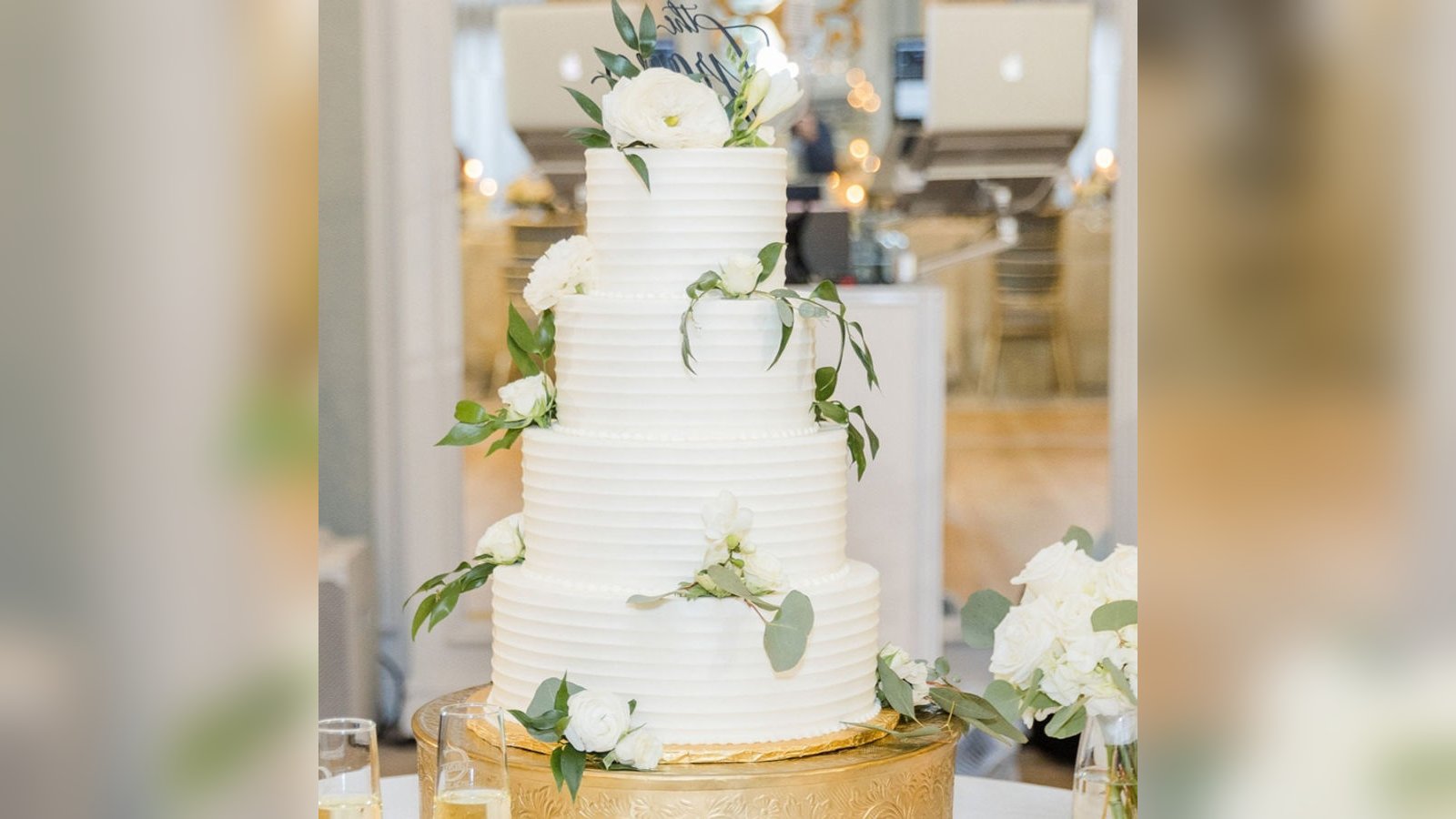
Photo: Sweet Escape Cake Company
Wedding Cakes
Wedding Cake Size Chart: How Much Cake Do You Need?
Every wedding cake size chart online gives you a different number, so here is the industry standard: a wedding slice measures 1 x 2 x 4 inches, a three-tier cake serves about 74 guests, a four-tier serves about 130, and you only need cake for 70-85% of your list. Below is every size, tier by tier.
If you have already searched this and felt like Google was not helping, you are not imagining it. Charts disagree because some assume bigger party slices and some assume shorter tiers. This one uses the standard wedding cut and the same serving counts Sweet Escape Cake Company uses to quote real Indianapolis weddings, so the numbers match what a baker will actually hand you.
What size should a wedding cake be?
Your wedding cake should hold about 80% as many servings as your guest count, because not everyone eats cake. For 100 guests, that means roughly 80 servings: a three-tier cake plus a small kitchen cake. Start with your headcount in the chart below, then adjust for your dessert situation.
| Guest count | Order about (80% rule) | Recommended cake | Wedding servings |
|---|---|---|---|
| 30 | 24 | 2-tier (6” + 8”) | 36 |
| 50 | 40 | 2-tier (6” + 10”) | 50 |
| 75 | 60 | 3-tier (6” + 8” + 10”) | 74 |
| 100 | 80 | 3-tier + small kitchen cake | 80-100 |
| 150 | 120 | 4-tier (6” + 8” + 10” + 12”) | 130 |
| 200 | 160 | 4-tier + kitchen cakes | 160+ |
Every cake is individually quoted by size and design, with all 19 flavors and 9 fillings included at the base price. See our wedding pricing guide for current pricing examples. The base includes one signature flavor and one filling per tier, and you can change both on every tier, so the size decision never limits the flavor decision.
One honest caveat before you commit the chart to memory: no serving chart survives an open dessert bar. If you are also putting out a cookie table or late-night donuts, drop toward 70% of your list. If cake is the plated dessert, order for everyone.
How many servings does each cake tier have?
A single round tier serves between 12 and 100 guests depending on its diameter. The industry standard comes from the Wilton serving guide, which defines a wedding serving as a 1 x 2 inch slice of a 4-inch-tall tier (Wilton, 2025). Here is the per-tier breakdown.
| Round tier size | Wedding servings (1” x 2” slice) |
|---|---|
| 6 inch | 12 |
| 8 inch | 24 |
| 10 inch | 38 |
| 12 inch | 56 |
| 14 inch | 78 |
| 16 inch | 100 |
Two details explain why other charts contradict this one. First, the cut: a party slice is 1.5 x 2 inches, half again wider than a wedding slice, so party charts show fewer servings from the same pan. Second, tier height: these numbers assume the standard 4-inch tier, and a baker stacking taller 5 or 6 inch tiers will quote you more servings per size. When you compare quotes from two bakeries, ask which slice and which height they count. It is the most common reason two “identical” cakes seem to feed different crowds.
Square tiers are the quiet cheat code. Corners hold more cake, so a square 6-8-10 stack yields about 100 wedding servings instead of 74. The advantage holds as you go up: square tiers yield roughly 30 to 35% more servings than round at the same tier sizes, 100 versus 74 at three tiers and 172 versus 130 at four. At Sweet Escape, square cakes are quoted at the same per-serving base as round, which makes them a smart pick when your list outgrows round tiers but a fourth tier feels like too much cake.
How many people does a tiered wedding cake feed?
A tiered wedding cake feeds anywhere from 36 guests with two tiers to more than 200 with five, since each added tier stacks its servings on top of the last. The classic three-tier feeds 74 and the four-tier feeds 130. Here is every common combination with its serving count.
| Tiered cake | Tier sizes (round) | Wedding servings |
|---|---|---|
| 2-tier | 6” + 8” | 36 |
| 2-tier | 6” + 10” | 50 |
| 3-tier | 6” + 8” + 10” | 74 |
| 3-tier (square) | 6” + 8” + 10” | about 100 |
| 4-tier | 6” + 8” + 10” + 12” | 130 |
| 4-tier (square) | 6” + 8” + 10” + 12” | about 172 |
| 5-tier | 6” + 8” + 10” + 12” + 14” | 208 |
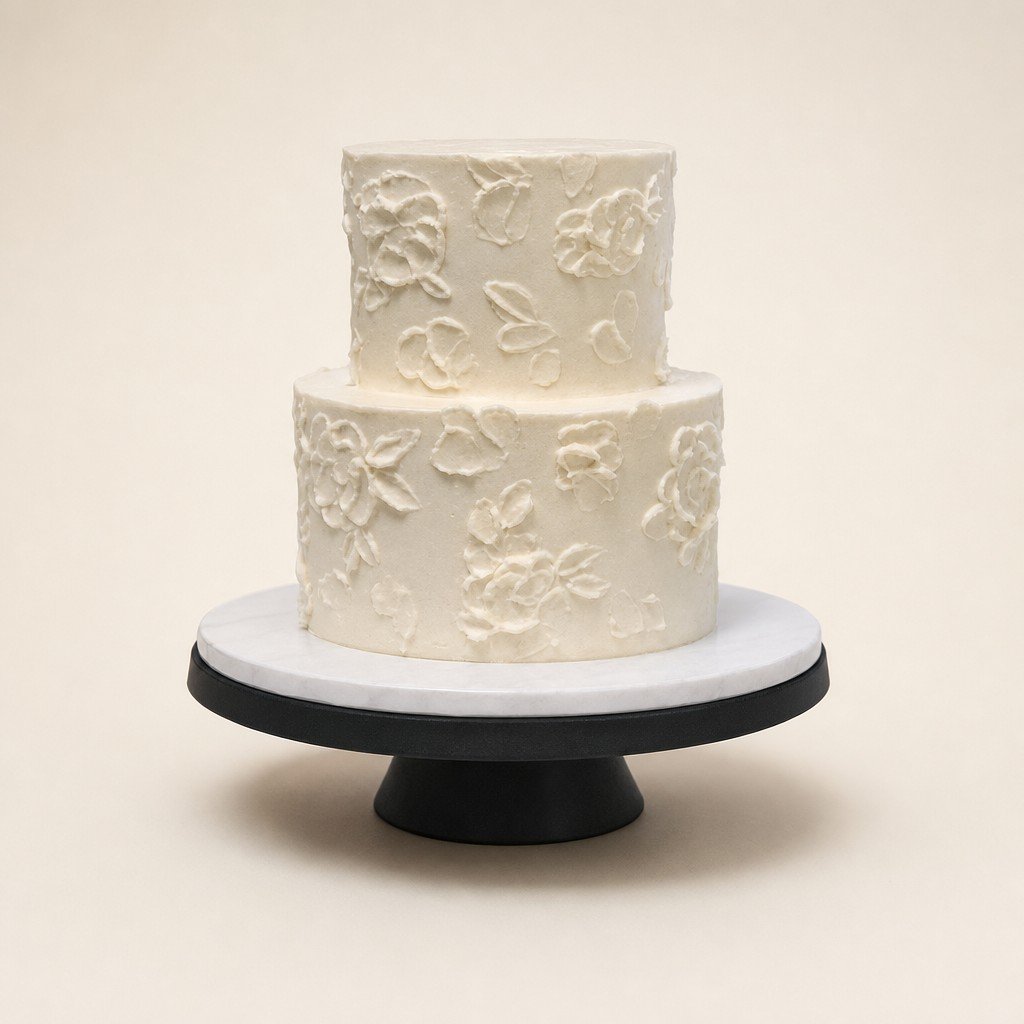
Notice the jumps are not even. Going from three tiers to four adds 56 servings, nearly as many as the entire first two tiers combined, because each new base tier is the biggest one yet. That is why couples caught between sizes usually do not need the bigger cake: a smaller display cake with sheet cakes in the kitchen covers the gap for about half the per-serving price. The full breakdown of tier styles, flavors, and booking timelines lives in our complete guide to wedding cakes in Indianapolis.
Tall cakes also change the logistics. A four or five-tier cake is heavy, fragile, and not something you want riding in a passenger seat in July, so plan on professional delivery and setup for anything over three tiers.
What size wedding cake feeds 100 guests?
For 100 guests, order a cake that yields 80 to 100 wedding servings. The average American wedding hosts 117 guests (The Knot, 2026), and Indiana runs right in that range at 117 to 127 (The Wedding Report, 2025), so this is the exact decision most couples face. You have three good options.
- Order full coverage. One hundred tiered servings, either a square three-tier or a small four-tier. Nobody counts slices, and leftovers go home with you. It is also the most expensive of the three.
- Three-tier plus kitchen cakes. A 74-serving display cake, plus 26 kitchen-cake servings at about half the decorated per-serving rate. Same slice on every plate, and it trims the total without dropping a single guest.
- Order for 80%. Eighty servings covers a 100-person list in practice, since some guests skip dessert, leave early, or are dancing when the cake comes out. It is the smallest order of the three, and the cheapest.
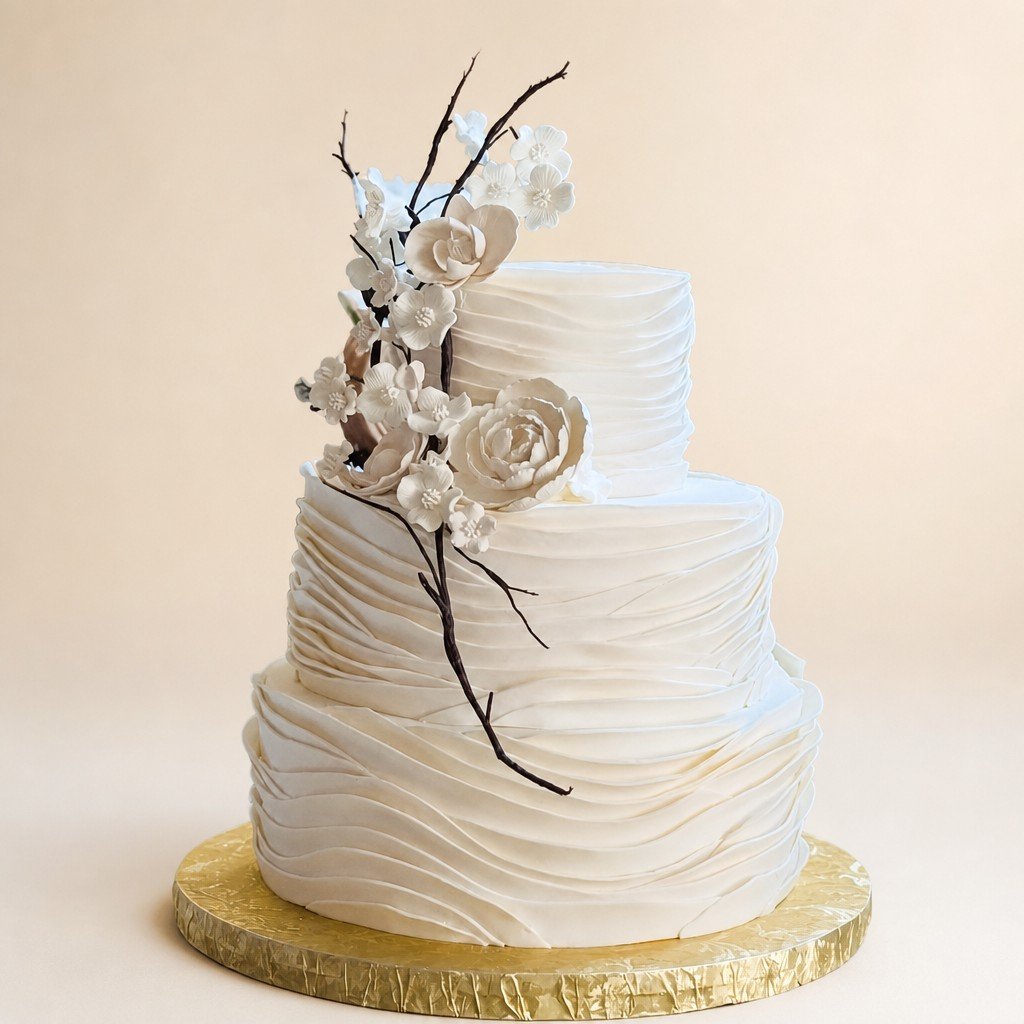
Our take, for what it is worth: option two is the sweet spot. You still get the tiered cake in your photos, every guest gets served, and the savings pay for an upgrade you will actually notice, like sugar flowers or a second filling. The full cost guide walks through what a wedding cake costs in Indianapolis line by line if budget is the bigger question.
What is the 80% rule for wedding cake?
The 80% rule says to order cake servings for about 80% of your confirmed guest count. It is a baker’s rule of thumb, not a law: The Knot’s planning team suggests portioning for about 70% of guests when other desserts are offered (The Knot, 2025), and Zola recommends 75-85% (Zola, 2026). Sweet Escape quotes land in the same band.
According to Amy McCorkle, owner of Sweet Escape Cake Company, “Couples almost always over-order cake, not under-order it. If your list says 150, cake for 120 disappears to the last slice, and nobody ever misses what was not there.”
A few adjustments make the rule sharper:
- Plated cake service: order for 90-100%. When the caterer sets a slice at every seat, nearly everyone eats it.
- Self-serve cake table: order for 70%. Guests grazing a dessert display take less cake than servers hand out.
- Dessert bar alongside: order for 60-70%. If cookies, pie, or a candy table competes, cake consumption drops fast, and if the cake is good, it still goes first.
- Cutting matters too. These counts assume a caterer cutting a proper grid: two inches in from the edge, one-inch slices, working inward. A volunteer with a butter knife loses about 10% to uneven cuts, which is one more reason venues charge cutting fees.
How do kitchen cakes stretch your servings?
Kitchen cakes are undecorated sheet cakes in your same flavors, cut in the kitchen and served alongside slices from your display cake. At Sweet Escape they are priced at about half the decorated tier rate per serving, so they turn any cake size into any guest count without anyone spotting the difference on the plate.
The math gets persuasive at real wedding sizes. Take 150 guests. A four-tier covers the room on its own at 130 servings, but a 74-serving three-tier display cake plus 46 kitchen-cake servings covers the same crowd, and those 46 servings are billed at roughly half what they would cost as decorated tier. You get an identical dessert course for noticeably less, since kitchen cakes are the same scratch-baked cake with the same fillings, just without the decorating labor. One thing they are not is a fix for a too-small cake ordered elsewhere; they need to be baked with your order, so plan them from the start.
Kitchen cakes beat the other famous trick, fake foam tiers, on pure economics. A dummy tier still has to be iced and decorated, and decoration is where the money is, so it saves almost nothing. Skipping decoration on servings nobody displays is what saves. We wrote a whole kitchen cakes guide on running this play well.
Should you save the top tier or serve it?
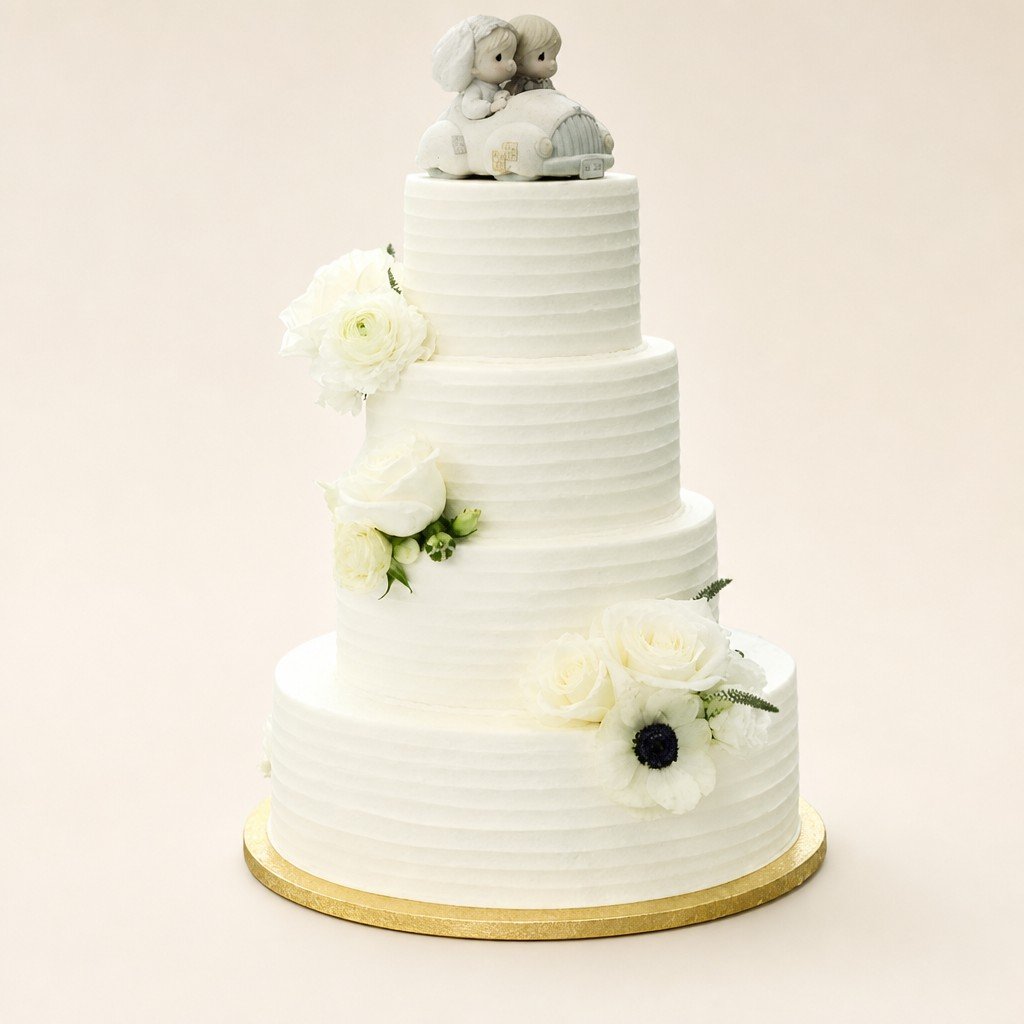
Serve it. Saving the top tier for your first anniversary is a sweet tradition, and about 48% of couples still planned to do it in The Knot’s most recent count (The Knot, 2021), but the tradition predates good taste: it started in 19th-century England, when the preserved fruitcake top was served at the couple’s first christening. Modern butter cake is a different animal. Most bakers say a frozen top tier holds up for about six months at best, and white cake with mousse fillings fades faster than that.
Here is the part that changes the sizing math at Sweet Escape: couples who serve their top tier on the wedding night get a free 6-inch anniversary cake, baked fresh, on their first anniversary. You trade a year-old frozen tier for a brand-new cake in the flavor of your choice. It also means the top tier’s 12 servings count toward your guest total, so you are not quietly buying a tier nobody eats.
If the tradition matters to you, save it anyway, and we will not argue with sentiment. Wrap it in plastic, then foil, freeze it the same week, and plan a six-month check-in taste rather than a 12-month gamble.
How do you calculate your wedding cake size?
Turn your guest list into a cake order in five steps. The whole calculation takes about two minutes with your RSVP estimate in hand.
- Start with your realistic guest count, the number you expect in the room, not the number you invited.
- Multiply by 0.8. Drop to 0.7 with a dessert bar, hold at 1.0 for plated service or if you want leftovers.
- Find that number in the tier chart above and pick the combination at or just above it. Between sizes, take the smaller display cake plus kitchen cakes.
- Send that serving count for a quote. Every cake is priced individually by size and design, and kitchen-cake servings come in at about half the decorated rate, so the mix you choose in step 3 moves the number as much as the size does. Our wedding pricing guide shows current examples, and a sanity check against the Indianapolis cost guide tells you whether any outside quote is fair.
- Decide the top tier’s fate. Serve it and count its servings (and claim the free anniversary cake), or save it and subtract 12 from your total.
Worked example: 130 expected guests, plated dinner but a self-serve cake table, so 130 x 0.8 = 104 servings. The four-tier (130) is safe but generous; a three-tier (74) plus 30 kitchen servings hits 104 on the nose, and hits it for less. Two minutes, decision made.
Run this before your tasting, not after. Cake size sets the budget conversation, and dates book up fast in peak months. Our wedding cake timeline guide covers when to lock everything in.
Ready to size your wedding cake?
You now know more about cake servings than most planners: 74 for a three-tier, 130 for a four-tier, 80% of the guest list, kitchen cakes at half price to fill any gap. The last step is tasting the thing, because a perfectly sized cake still has to be the best bite of the night.
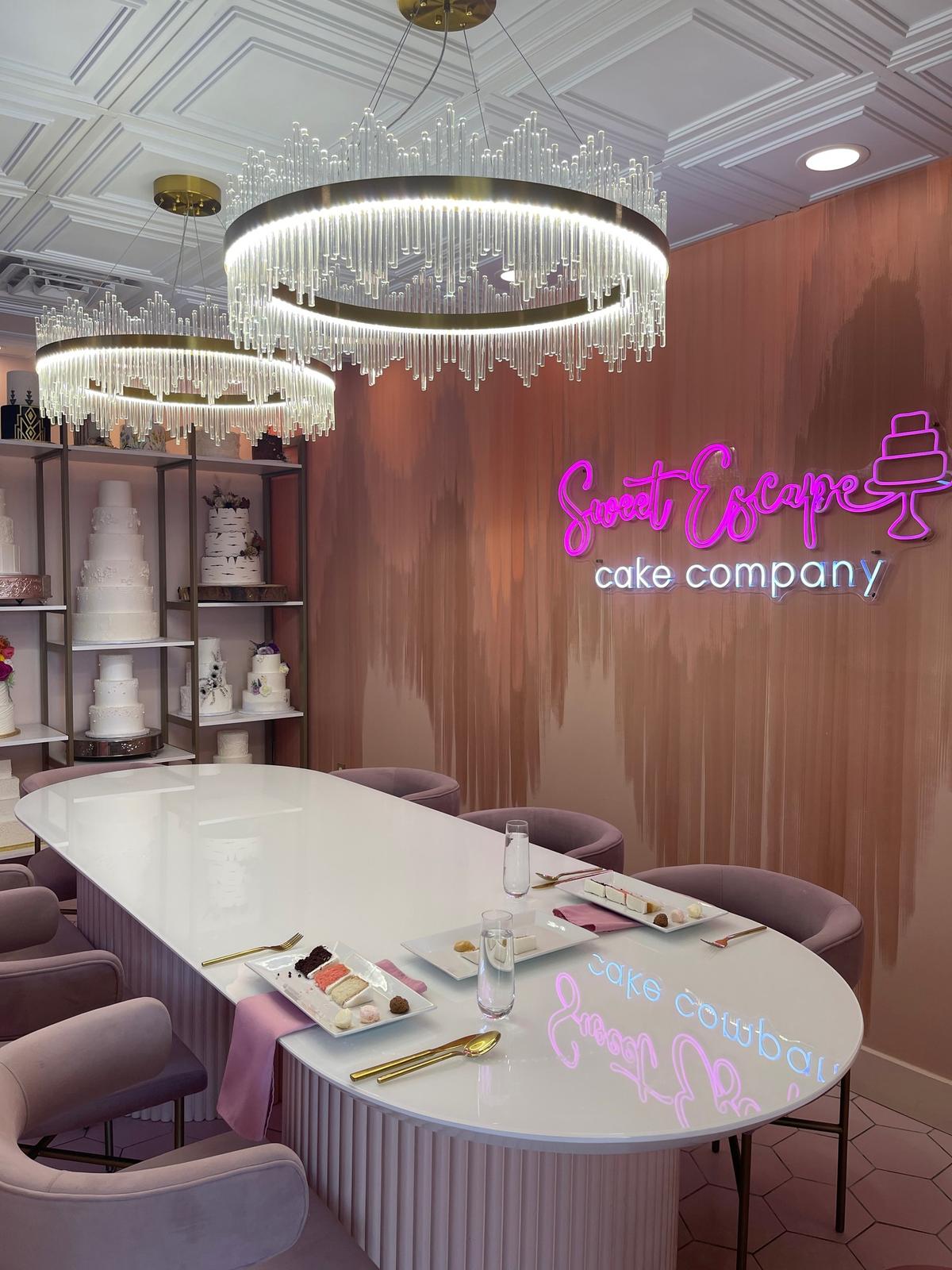
Bring your guest count to a tasting and we will run the sizing math with you on the spot, across 19 flavors and 9 fillings included at the base price. A tasting is $30 for up to three people, credited toward your order when you book a $500+ cake the same day, or you can request a quote with your date and headcount and we will size it from there. Every special occasion deserves a Sweet Escape.
Frequently Asked Questions
What size wedding cake will feed 100 guests?
A three-tier cake with 6, 8, and 10 inch tiers serves 74, so 100 guests need either a four-tier (about 130 servings) or a three-tier plus a small kitchen cake. Since roughly 80% of guests eat cake, many couples order 80 servings for a 100-person list and never run out.
What is the 1/2/3/4 cake rule?
It has nothing to do with sizing. The 1-2-3-4 rule is an old recipe formula: 1 cup of butter, 2 cups of sugar, 3 cups of flour, and 4 eggs. For deciding how much cake to order, use a servings chart and your guest count instead, not the 1-2-3-4 rule.
Will a 10 inch cake feed 20 people?
Yes, comfortably. A 10-inch round tier cut into standard 1 x 2 inch wedding slices yields about 38 servings, and even generous 1.5 x 2 inch party slices yield about 28. For 20 guests you could go smaller: an 8-inch round serves about 24 wedding-cut slices.
Is a 3 layer 8 inch cake enough for 30 people?
Not quite. Layers are the horizontal cake layers inside one tier, so a three-layer 8-inch cake is still a single 8-inch tier, which serves about 24 wedding-cut slices. For 30 people, add a 6-inch tier on top (36 servings total) or step up to a 10-inch.
How many tiers does a wedding cake for 150 guests need?
Four tiers, or three tiers plus kitchen cakes. A four-tier cake (6, 8, 10, and 12 inch) serves about 130, which covers 150 guests once you account for the 70-85% of guests who actually eat cake. The budget route is a three-tier display cake with sheet cakes served from the kitchen.
What sizes make up a 3 tier wedding cake?
The classic three-tier combination is a 6-inch top, 8-inch middle, and 10-inch base, all round. Cut to the standard 1 x 2 inch wedding slice, that stack serves about 74 guests. At Sweet Escape Cake Company it is quoted individually by size and design, with all 19 flavors and 9 fillings included at the base price and a different flavor allowed in every tier.
Should you save the top tier or serve it?
Serve it. About 48% of couples still save the top tier for their first anniversary (The Knot, 2021), but a year in the freezer rarely does cake any favors. Sweet Escape couples who serve their top tier get a free 6-inch anniversary cake made fresh one year later, which tastes far better than thawed cake.
More from the blog
Wedding Cakes
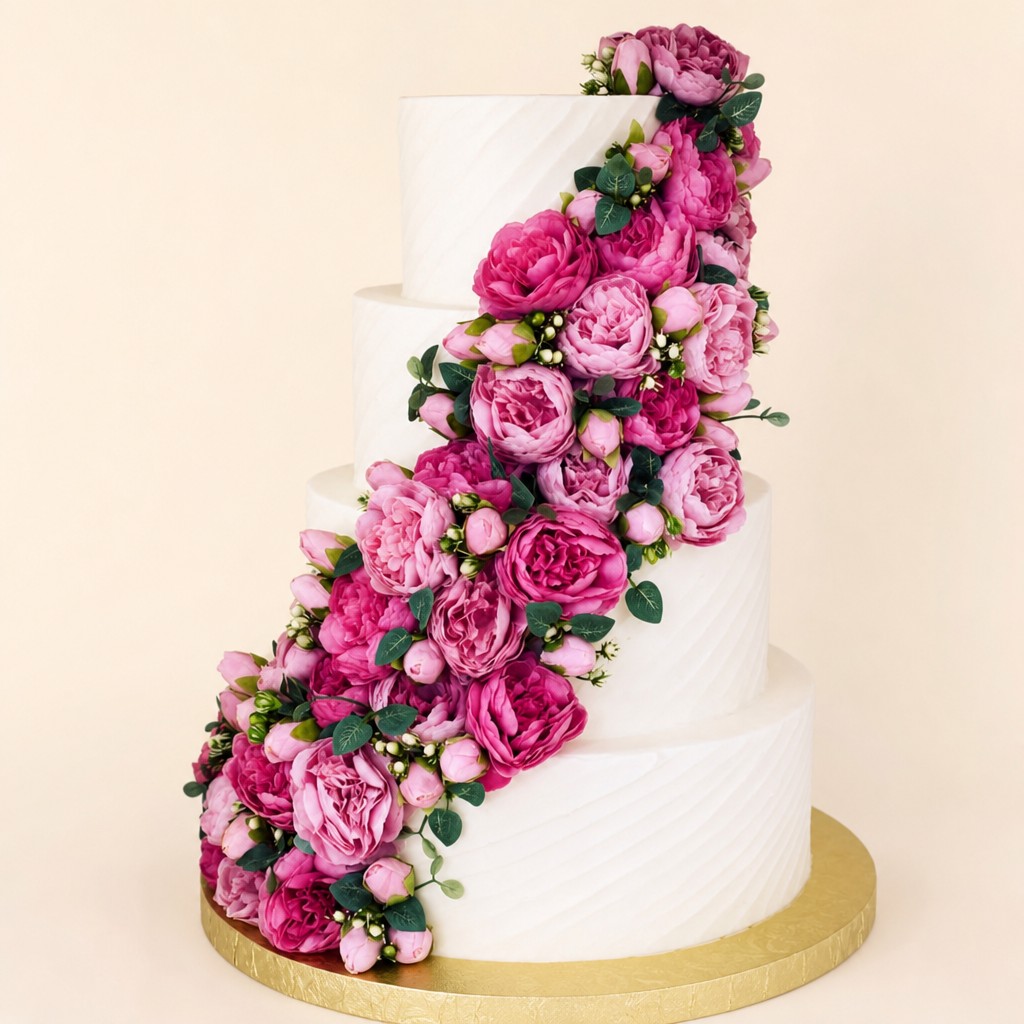
Wedding Cake Delivery in Indianapolis: How It Works
How wedding cake delivery works in Indianapolis: real delivery fees, when the cake arrives, what setup includes, and when DIY pickup is safe.
Wedding Cakes
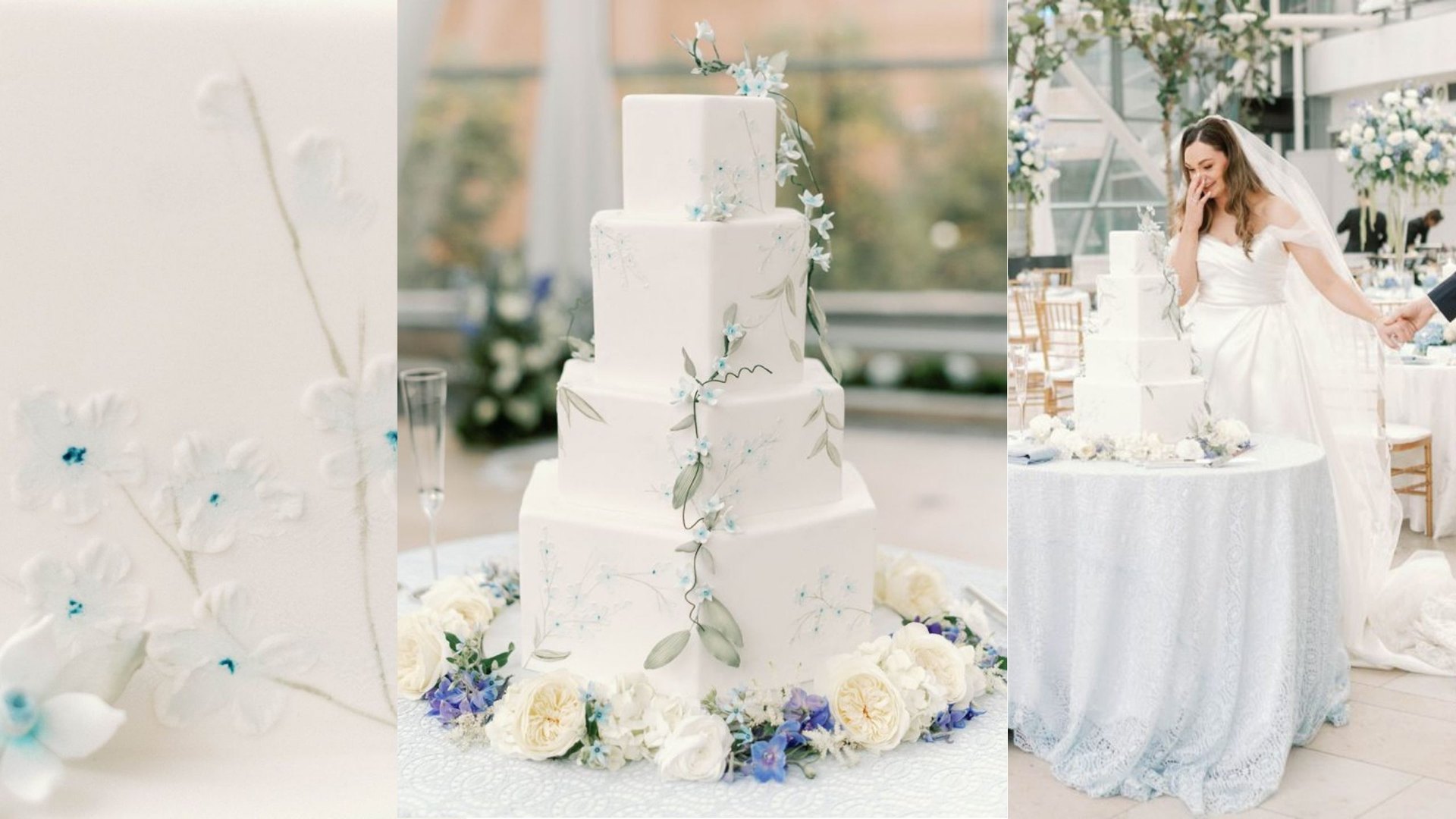
Fondant vs. Buttercream: Which Is Right for Your Cake?
Fondant vs buttercream for your wedding cake: how taste, cost, looks, and Indiana summer heat compare, and why most Indianapolis couples choose buttercream.
Wedding Cakes
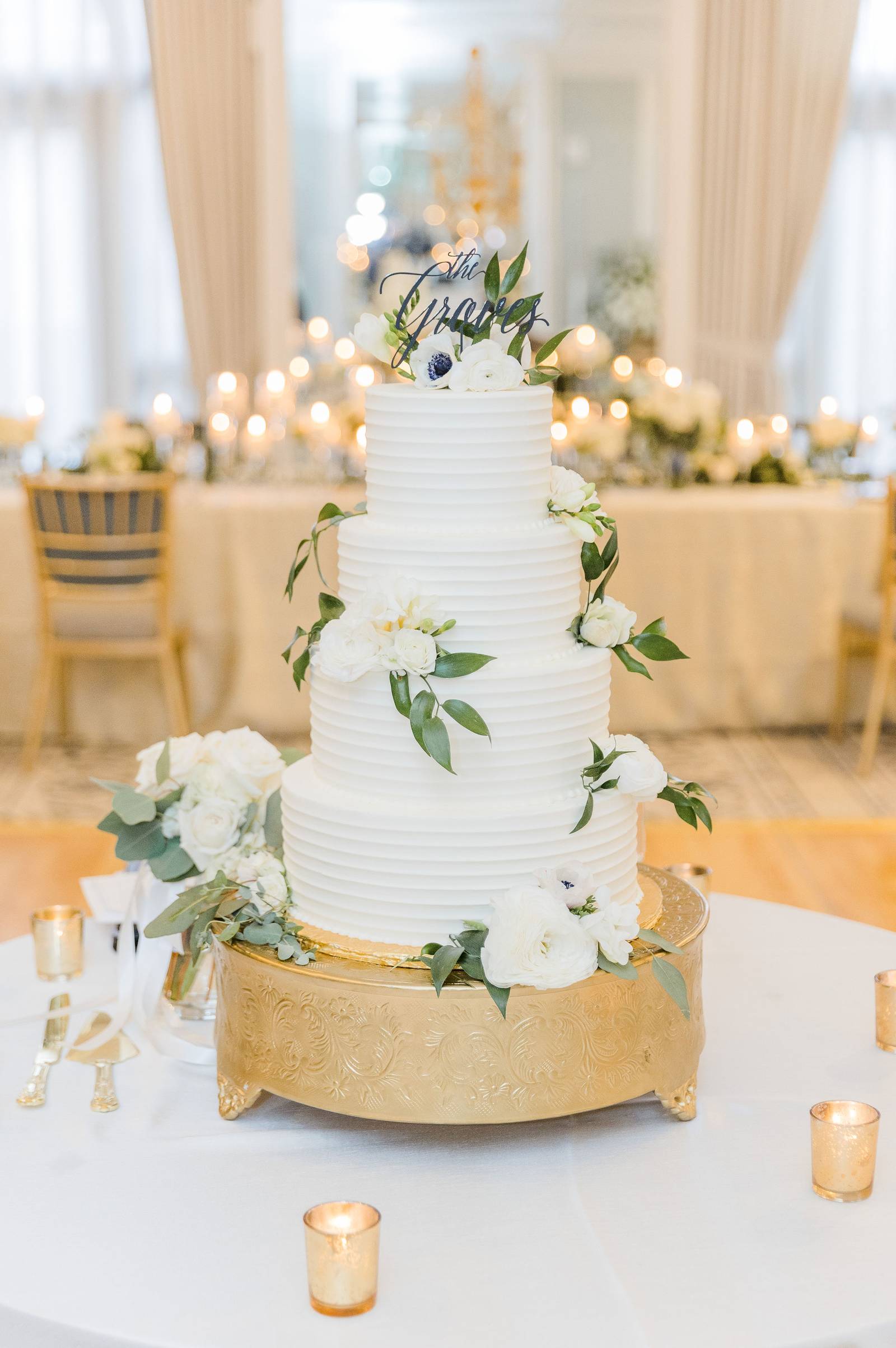
Kitchen Cakes: The Sheet Cake Wedding Budget Trick That Works
Kitchen cakes are plain sheet cakes that feed wedding guests for exactly half the per-serving price of decorated tiers. See how the math works at every guest count.